
When your vehicle becomes disabled on the road, understanding how towing services work helps reduce stress and ensures you get the right assistance quickly. The process typically begins with a phone call to a towing provider, followed by dispatch, vehicle assessment, safe loading, transport to your chosen destination, and drop-off. Each step involves specific protocols designed to protect your vehicle and get you back on track efficiently.
A breakdown can happen anywhere, from highway shoulders to parking lots, and knowing what happens after you call for help makes the experience more manageable. Professional towing companies follow standardized procedures to handle different vehicle types and breakdown scenarios safely.
Why Knowing the Towing Process Matters
Understanding what happens during a tow saves time and helps you communicate clearly with the service provider. When you know the steps involved, you can provide accurate information about your situation, which allows the dispatcher to send the right equipment and prepare the driver for your specific needs.
Different breakdown scenarios require different towing methods. A car with transmission problems needs different handling than one stuck in a ditch or involved in an accident. The more you understand about the process, the better you can prepare your vehicle and belongings before the tow truck arrives.
What Happens When You Call for a Tow
The towing process starts the moment you make contact with a service provider. The dispatcher will ask for your exact location, vehicle type, and the nature of your problem. GPS coordinates or nearby landmarks help the driver find you faster, especially on highways or in unfamiliar areas.
You will also need to specify your destination, whether that is your home, a repair shop, or a dealership. The dispatcher uses this information to calculate distance and estimated arrival time. They will also confirm what type of tow truck you need based on your vehicle size and the breakdown situation.

Step-by-Step Breakdown of the Towing Process
Once dispatch confirms your service request, the towing process follows a clear sequence designed for safety and efficiency.
Initial Contact and Dispatch
After your call, the dispatcher assigns the job to the nearest available driver with the appropriate equipment. You receive an estimated time of arrival, typically ranging from 20 to 45 minutes depending on traffic and distance. Many companies provide real-time updates via text or phone as the driver approaches.
Driver Arrival and Assessment
When the tow truck arrives, the operator inspects your vehicle and confirms the information you provided. They check for damage, assess how the car sits, and verify whether special equipment like a winch is needed. This assessment determines the safest loading method.
Vehicle Preparation and Loading
Before loading, the driver may ask you to remove personal items or ensure the vehicle is in neutral. For flatbed towing, the truck bed tilts down to ground level, and the vehicle is pulled or driven onto the platform using a winch. Wheel-lift towing involves securing the drive wheels off the ground while the others remain on the road surface.
Securing and Transport
Once loaded, the operator uses chains, straps, or specialized hooks to secure your vehicle firmly. Proper securing prevents shifting during transport and protects your car from additional damage. The driver then transports your vehicle to the specified destination, following routes that minimize bumps and sharp turns.
Drop-Off and Documentation
At the destination, the driver carefully unloads your vehicle and positions it where you request. You will sign paperwork confirming the service, and payment is processed. Many companies accept cash, cards, or digital payments on-site.
Different Types of Towing Methods Explained
The method used to tow your vehicle depends on several factors including vehicle type, condition, and the breakdown scenario. Flatbed towing is the safest option for most situations because all four wheels are off the ground, eliminating wear on the transmission or drivetrain. This method works well for luxury cars, all-wheel-drive vehicles, and cars with significant damage.
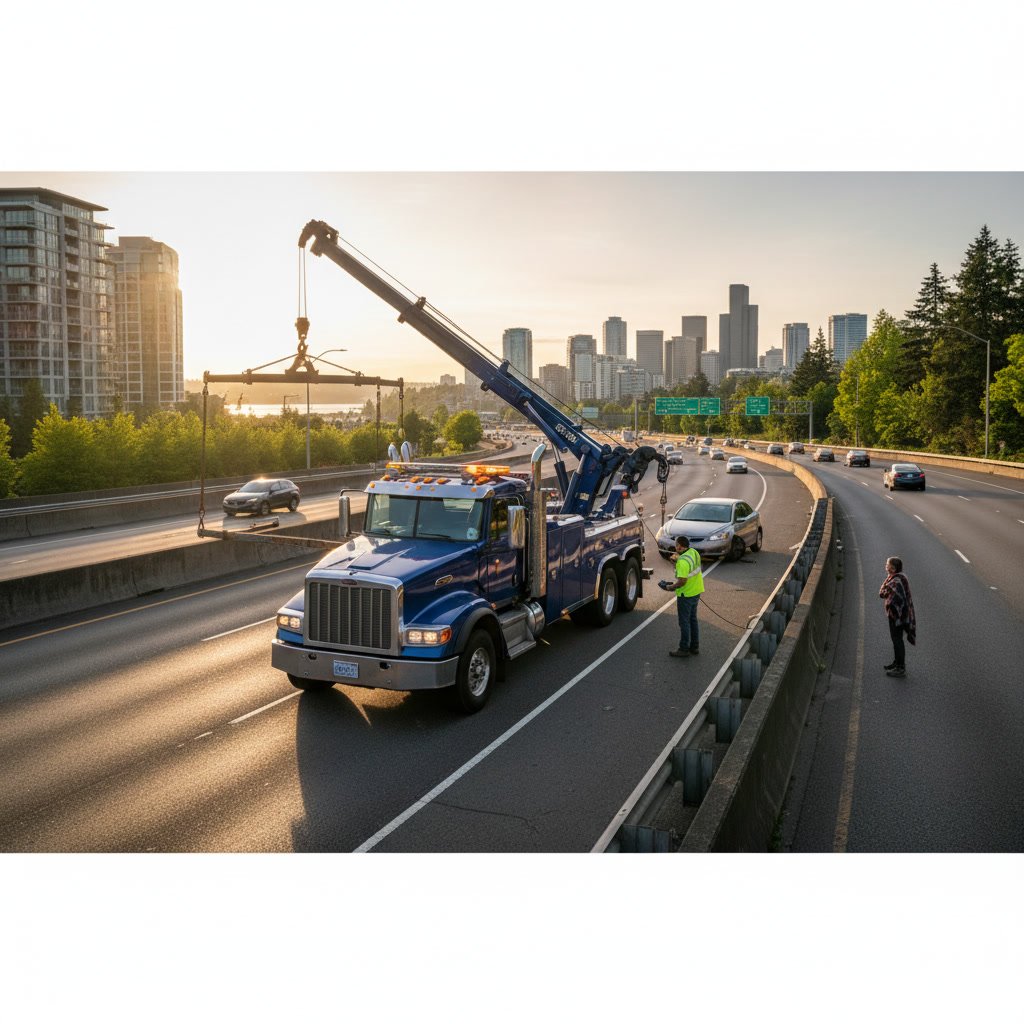
Wheel-lift towing uses a metal yoke that cradles the front or rear wheels, lifting them off the ground while the opposite wheels roll. This method works for short distances and vehicles without drivetrain damage. Heavy-duty towing uses specialized equipment for large trucks, RVs, or commercial vehicles, with reinforced booms and higher weight capacities.
Professional Towing Services Available in Bellevue
Drivers throughout the region have access to comprehensive vehicle recovery options when breakdowns occur. Local providers offer multiple service types to match different emergency situations and vehicle needs.
Flatbed towing remains the preferred choice for modern vehicles with complex drivetrains. Specialized motorcycle towing uses different securing methods designed for two-wheeled vehicles, often employing wheel chocks and soft straps to prevent cosmetic damage.
Long-distance towing requires planning for fuel stops, route selection, and additional securing checks during extended transport. Providers equipped for these jobs ensure your vehicle reaches distant destinations safely.
What Drivers Should Do While Waiting for the Tow Truck
Safety comes first when your car breaks down. Move to a safe location away from traffic if possible. Turn on hazard lights and, if you have them, place warning triangles or flares behind your vehicle to alert other drivers.
Stay inside your vehicle with seatbelts fastened if you are on a busy highway and cannot safely exit. If you are in a parking lot or side street, you can wait outside in a safe spot. Gather your insurance information, registration, and any personal items you want to remove before the tow.
Keep your phone charged and accessible so the driver can reach you when they arrive. If your location is difficult to find, be prepared to describe nearby landmarks or businesses that help with navigation.
Common Situations That Require Emergency Towing
Mechanical failures account for most towing calls. Engine problems, transmission failures, and overheating leave vehicles immobile and unsafe to drive. Attempting to drive a severely damaged vehicle often causes additional costly repairs.
Accident recovery situations require careful handling, especially when airbags have deployed or structural damage affects how the vehicle sits. Professional operators know how to lift and secure damaged cars without worsening the condition.
Flat tires usually qualify for roadside tire changes, but if multiple tires are damaged or the spare is missing, towing becomes necessary. Dead batteries often need only a jump start, but if the electrical system has failed completely, a tow to a repair facility makes more sense than repeated jump attempts.
How Towing Costs Are Calculated
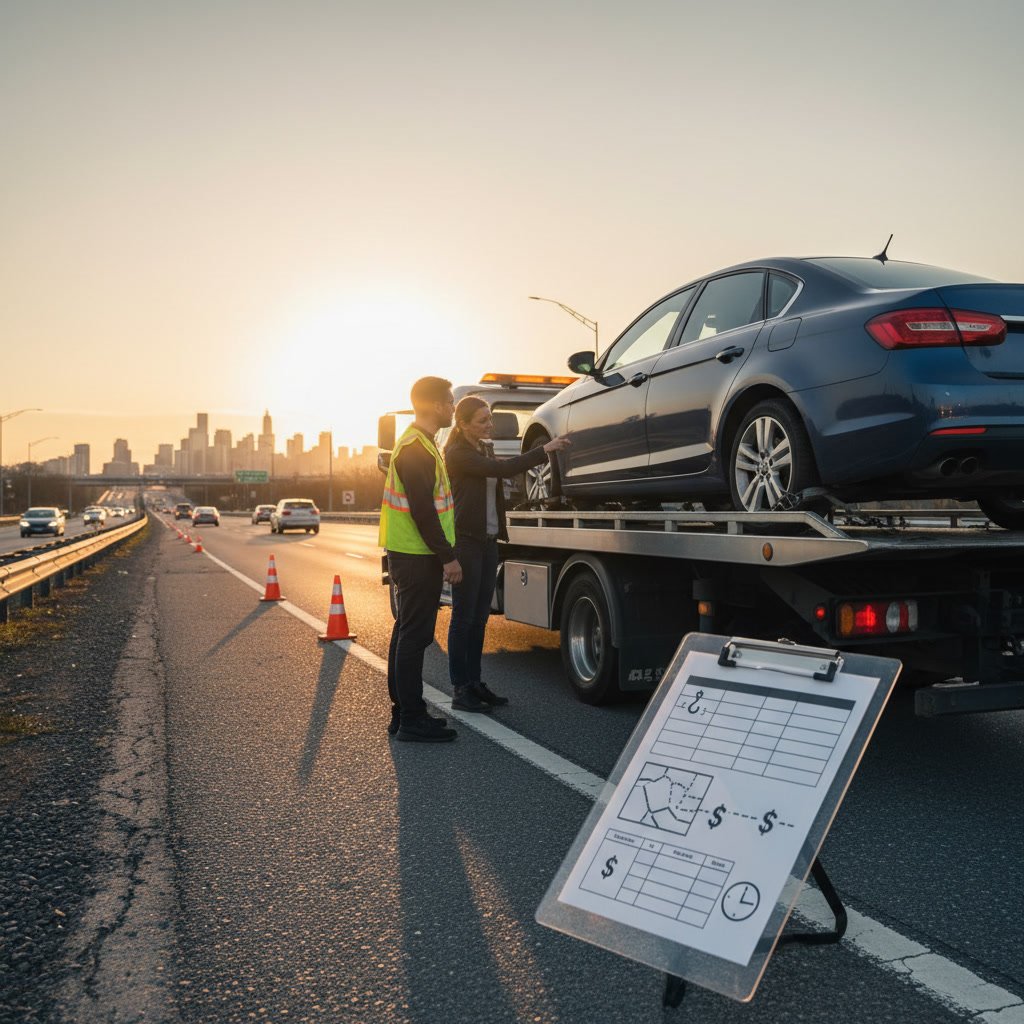
Towing fees typically include a base hook-up charge plus a per-mile rate. The base fee covers the driver’s time, fuel, and equipment use for arriving and loading your vehicle. Per-mile charges apply from your breakdown location to the destination.
Additional fees may apply for after-hours service, holidays, or specialized equipment like winch-outs or heavy-duty trucks. Complex recovery situations, such as vehicles in ditches or off-road locations, require more time and equipment, which increases the total cost. Most companies provide a quote over the phone once they understand your situation.
Insurance policies with roadside assistance often cover towing up to a certain mileage limit, typically between 10 and 100 miles depending on your plan. Check your policy details to understand what your coverage includes before authorizing the tow.
Choosing Between Roadside Repair and Full Towing
Not every breakdown requires a tow to a repair shop. Many problems can be solved on-site with roadside assistance. Dead batteries, flat tires, empty fuel tanks, and lockouts typically need quick fixes rather than transport.
A professional operator can assess whether your issue is roadside-repairable or requires shop-level diagnostics. If your check engine light is on but the car runs normally, you might drive to a mechanic yourself. If the engine seized, transmission slipped into limp mode, or you hear grinding noises, a tow prevents further damage.
The decision often comes down to drivability and safety. When in doubt, choosing a tow protects your vehicle and avoids the risk of a more serious breakdown in traffic.
What Happens to Your Vehicle After Drop-Off
Once your car arrives at the repair shop or your home, the driver unloads it and confirms placement with you. If you are dropping it at a closed shop after hours, many facilities have secure key drop boxes and designated parking areas for towed vehicles.
The towing company provides you with a receipt that includes pickup location, destination, mileage, and any notes about vehicle condition. Keep this documentation for insurance claims or warranty purposes. If your car was towed due to an accident, these records become part of your claim file.
Most repair shops begin diagnostics the next business day. Communicate clearly with both the towing company and the shop about any specific damage, warning lights, or symptoms you noticed before the breakdown.
Getting Back on the Road with Reliable Help
A breakdown is never convenient, but professional assistance makes recovery straightforward. Knowing the towing process helps you stay calm, communicate effectively, and make informed decisions about your vehicle’s care. Whether you need a simple roadside fix or full transport to a repair facility, experienced operators handle each step with attention to vehicle safety and customer service.
Preparation also helps. Keep your phone charged, know your insurance coverage details, and have a trusted provider’s contact information saved. When the unexpected happens, quick access to help minimizes downtime and stress.
AK Roadside & Towing provides comprehensive vehicle recovery throughout the region, from simple jump starts to complex accident recovery. When you need dependable support after a breakdown, experienced operators are ready to respond with the right equipment and professional handling. Call 4252345996 for fast, reliable towing and roadside assistance whenever vehicle trouble strikes.